Be Alert for Invasive Species
Ridge top lakes & forests
Catskill Regional Invasive Species Partnership
Check out the Catskill Regional Invasive Species Partnership (CRISP). Invasive species can disrupt the delicate balance of our ridge top ecosystems, outcompeting native plants and altering the habitats that local wildlife depend upon.
Emerald Ash Borer
Agrilus planipennis
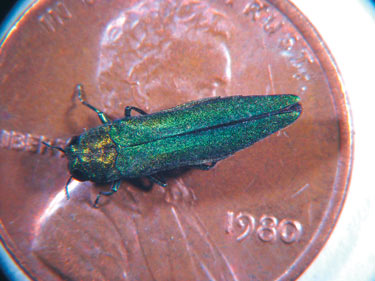
Emerald Ash Borer was confirmed in New York on 17 June 2009. Most trees die within 2 to 4 years of becoming infested. The emerald ash borer is responsible for the destruction of over 50 million ash trees in the U.S. since its discovery in Michigan.
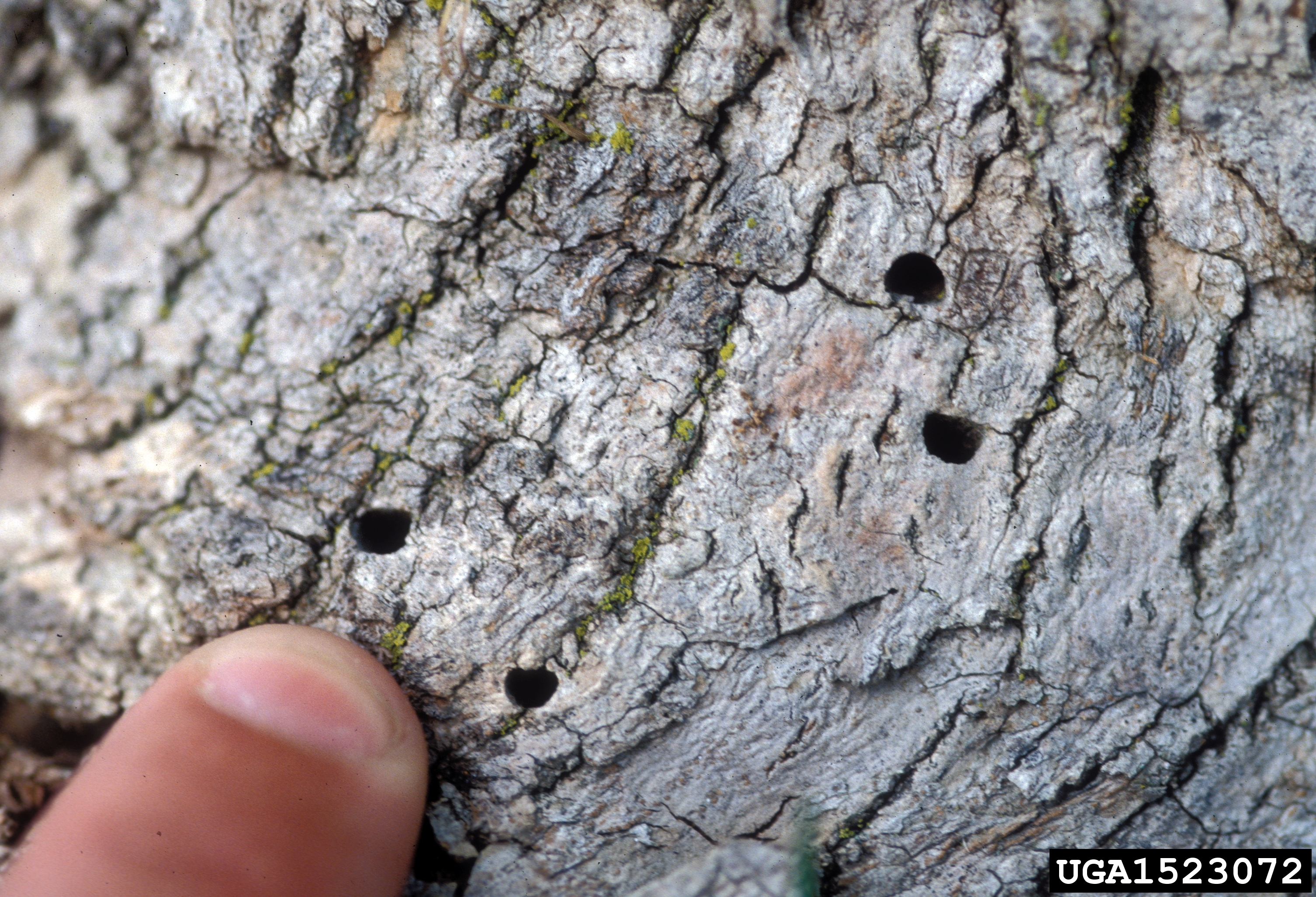
Adult beetles leave distinctive D-shaped exit holes in the outer bark of the branches and the trunk. Adults are roughly 3/8 to 5/8 inch long with metallic green wing covers and a coppery red or purple abdomen.
In New York, if you suspect EAB in your ash trees, call the DEC's EAB and Firewood hotline at (866) 640-0652. More info: emeraldashborer.info and DEC EAB.
"Early detection is the best defense against an invasive species that can reshape a forest in a single season."
Asian Clam
Corbicula fluminea
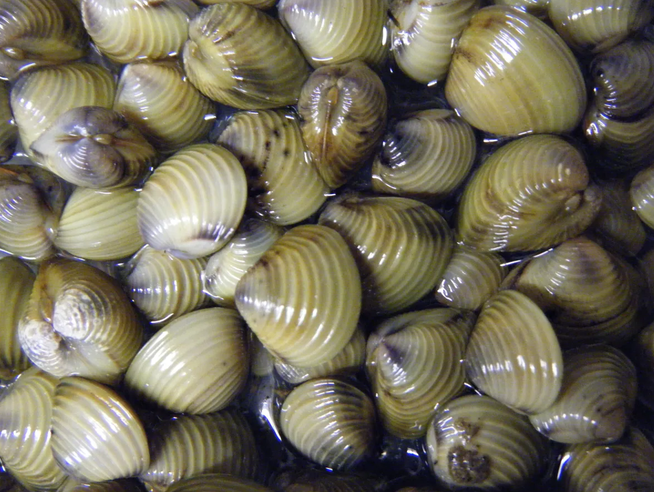
The Asian clam, Corbicula fluminea, is a small bivalve native to southern Asia, the eastern Mediterranean, and Australia. They are usually less than 1.5 inches in size, with a light green / light brown shell and distinctive concentric ridges.
Asian clams were found off Lake Avenue Beach in Lake George Village in August 2010, with initial concentrations of up to 600 clams per square meter across approximately 2.5 acres.
Eurasian Milfoil
Myriophyllum spicatum
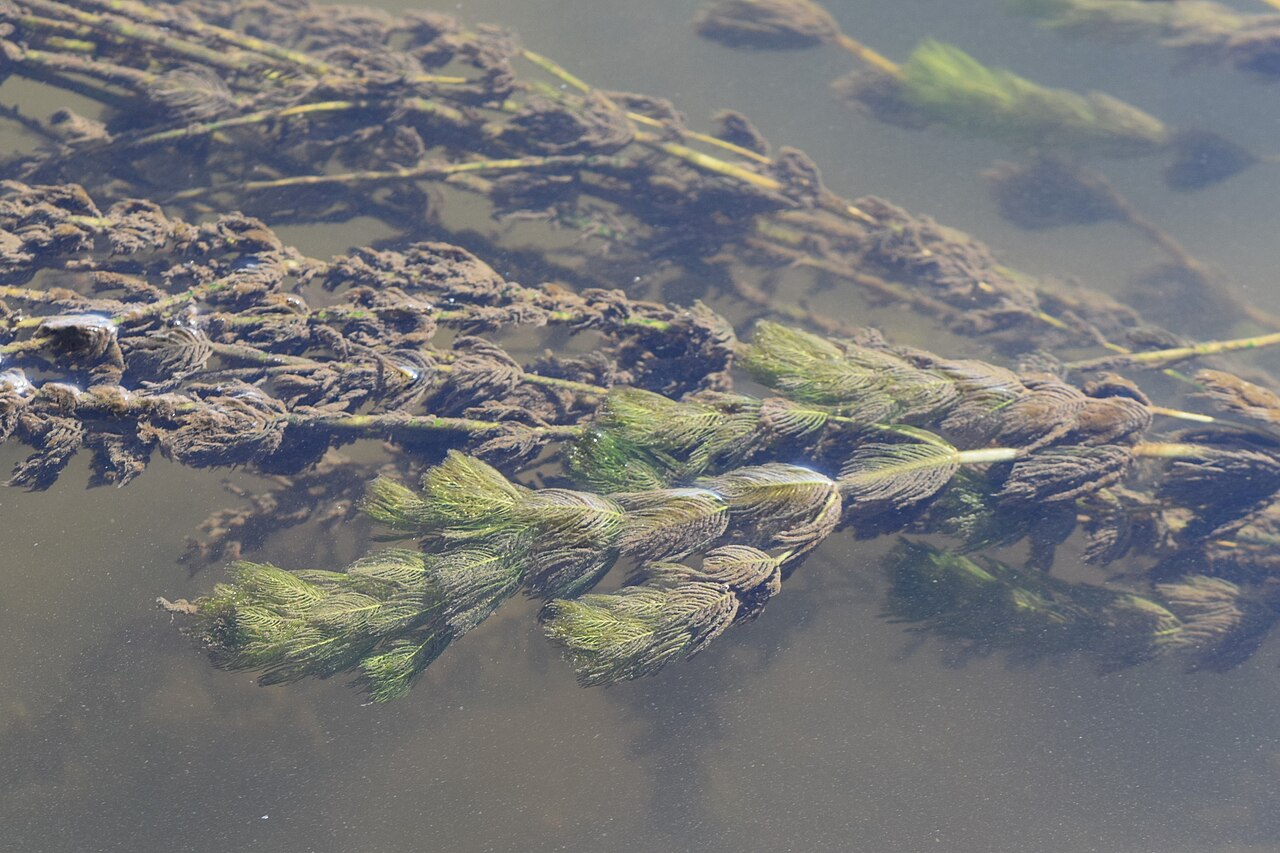
Eurasian milfoil reproduces through fragmentation. It spreads rapidly and displaces beneficial native plant life, makes swimming difficult, and can devalue waterfront property. Under optimum conditions, milfoil may grow up to an inch per day.
Milfoil most likely arrived as a "stowaway" fragment attached to a boat or trailer. Milfoil can live out of water for many hours if it remains moist.
"Clean, drain, dry — every boat, every time."